
The Elegance and Engineering of the Sidesaddle
The story of the sidesaddle is really the story of how women went from being passengers to being powerful equestrians in their own right.
The Art of Sitting Aside
Women have ridden horses for as long as horses have been ridden, but not always in the way we imagine. Early medieval women often rode as passengers on a pillion pad behind a man, seated sideways on a cushion-like seat attached to the saddle. These early arrangements allowed for transportation but not independence since the man effectively had all control of the horse.
By the late 1300s, things changed when Princess Anne of Bohemia arrived in England to marry King Richard II. She is often credited with making the sidesaddle popular among the nobility. Her version of the saddle was basically a chair turned sideways on the horse’s back with a small footrest called a planchette. While this was a step up from sitting behind a man, the design was very shaky. Someone else usually had to lead the horse while the lady just sat there as a passenger.
Catherine de Medici and the First Pommel
True independence for women on horseback began in the 1500s, thanks to Catherine de Medici, the Queen of France. She wanted to keep up with the men during hunting trips (and show off her legs, which she was very proud of-but that’s another story). She helped develop a new saddle design where the rider sat facing forward instead of completely sideways.
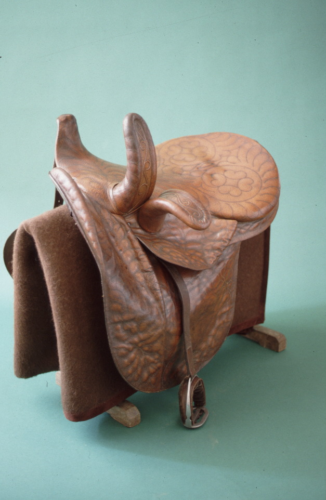
This version included a horn, or pommel, that the rider could hook her right leg over. This gave the rider a much better grip and allowed her to use the reins and control her own horse at faster speeds. Instead of a wooden footrest, the rider used a leather-covered metal stirrup called a slipper stirrup for the left foot. Finally, women were no longer just along for the ride.
Riding in the Regency Era
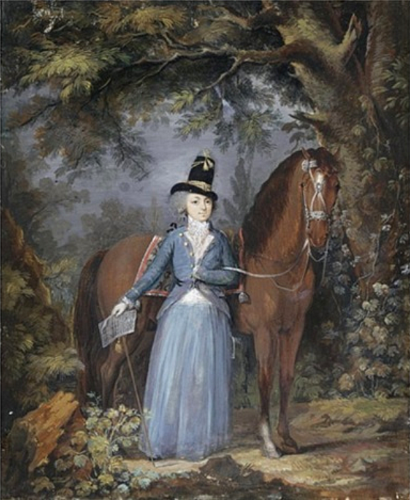
During the Regency era of the early 1800s, riding sidesaddle was a way to demonstrate wealth and genteel upbringing. Riding lessons required leisure time to learn and practice and disposable income to dedicate to the instructors, the horse and required tack, and the all-important riding habit for riding in highly visible places like London’s Hyde Park.
Women riders usually required a dedicated horse for their use. Ladies’ horses were smaller, gentler, and often older than the horses which men used. Consequently, ladies often rode ponies. A lady’s mount had to be very even-tempered, and have a very smooth, comfortable gait. A bumpy or rough stride, made a horse unsuitable for a sidesaddle. (Interesting note, even though a ladies’ horse had to have excellent behavior, it was still less valuable than a man’s horse.)
Many girls actually started out learning to ride astride on a pony or a donkey when they were very small. During adolescence, they would transition to the sidesaddle as a sign of their growing skill and sophistication. Sitting correctly took a lot of practice because the rider had to stay balanced without using her right leg to grip the horse’s side. To make up for this, she would carry a long whip in her right hand. This whip wasn’t for punishment; it was used to gently tap the horse on the right side to give it the same signals a rider’s leg would normally give.
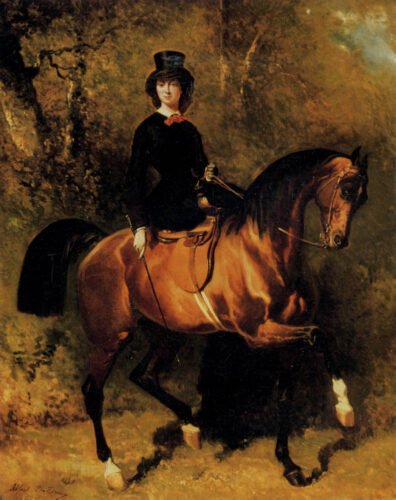
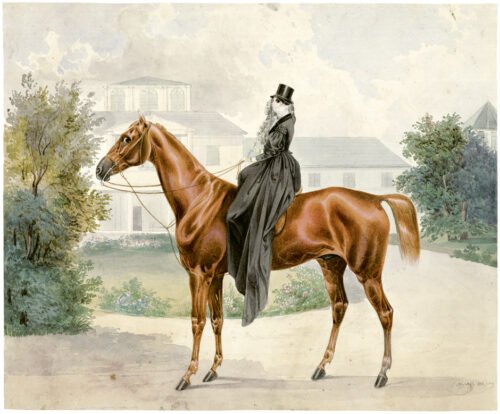
A lady’s riding clothes, known as a riding habit, were just as important as the saddle she used. Tailors usually made these outfits to ensure perfect fit. A Regency habit consisted of a fitted jacket or bodice with long sleeves and an incredibly long, full skirt. This skirt draped down over the side of the horse to cover the lady’s feet and ankles completely. The long skirt was essential for modesty, but could pose a danger, especially if she fell and the skirt tangled in the saddle. Her skirt could drag along her behind an out-of-control horse.
The Victorian Riding Revolution
The biggest breakthrough in sidesaddle design came in the mid-1830s. Jules Pellier invented a second pommel that changed everything. This new pommel, called the leaping head or leaping horn, curved down over the rider’s left thigh. Before this invention, women usually avoided jumping fences because the old one-pommel saddles were not secure enough. If a horse bucked or jumped, the rider could easily be tossed off. But with the leaping head, a lady could squeeze her right leg down and her left leg up, creating an incredibly firm grip. This was so effective that women could gallop through the countryside and jump over high hedges and fences during fox hunts. It made riding aside much safer and allowed women to be just as daring as the men on the hunting field.
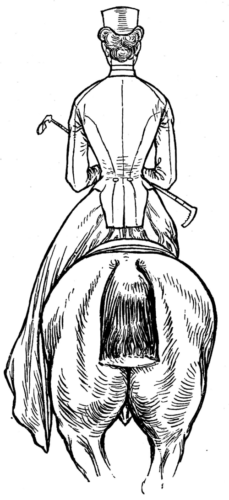
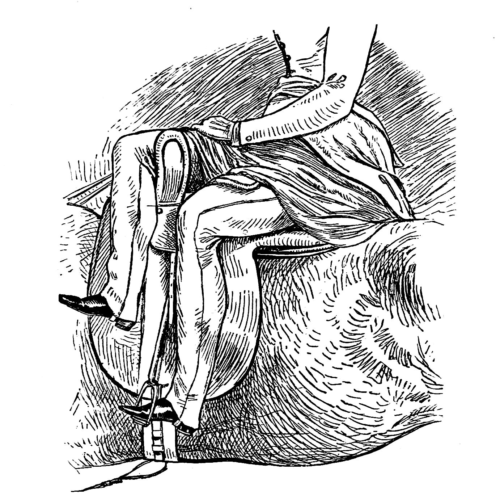
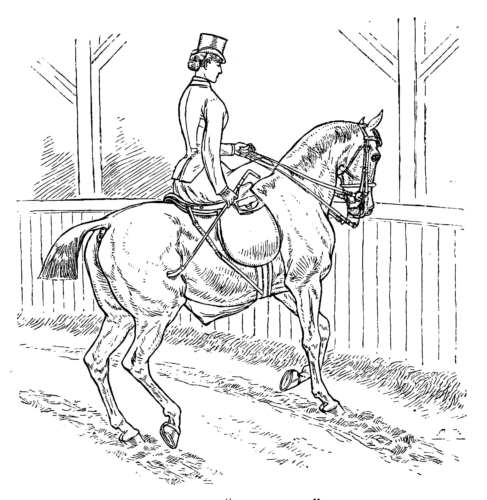
As the Victorian era progressed, the riding habit evolved, too. Long, heavy skirts catching on the saddle gave way to the safety skirt in 1875. These skirts were designed to tear away or unbutton if the rider was falling, which prevented her from being dragged along by the horse.
Eventually, this became the riding apron that is still used today. An apron looks like a full skirt when the lady is on the horse, but it is actually open in the back so she isn’t sitting on extra layers of fabric. Underneath the apron, Victorian women began to wear breeches or trousers for protection and comfort, leading to the modern riding outfits we see today.
What do you think? Tell me in the comments.
Read more about Sedan chairs, Bath Chairs, and other modes of transportation here.
Find the Full References List Here
“History of Side Saddle: From Medieval Origins to Modern Revival.” Just Horse Riders (blog). Accessed March 23, 2026. https://www.justhorseriders.co.uk/blogs/news/history-of-side-saddle-from-medieval-origins-to-modern-revival.
“Reading the Regency – Transport – The Horse Part 2.” Reading the Regency (serial article), January 26, 2019. https://www.wattpad.com/687475980-reading-the-regency-transport-the-horse-part-2/page/5.
American Sidesaddle Association. 2025. “A Brief History of Sidesaddle Riding: A Connection to Female Advancement.” Accessed March 23, 2026 https://americansidesaddleassociation.com/a-brief-history/
Donnelly, Shannon. “In the Saddle: Regency Riding.” Shannon Donnelly’s Fresh Ink (blog), December 16, 2013. Accessed March 23, 2026https://shannondonnelly.com/2013/12/17/in-the-saddle-regency-riding/.
Hatch, Donna. “Riding Sidesaddle in Regency England.” Donna Hatch (author blog), April 23, 2017. Accessed March 23, 2026 http://donnahatch.com/riding-sidesaddle-in-regency-england/.
Historic UK. “Riding Side-Saddle.” Historic UK. Last modified December 1, 2023. Accessed March 23, 2026 https://www.historic-uk.com/CultureUK/Riding-SideSaddle/.
Museum of the Horse. “A History of Side Saddle Equitation.” Museum of the Horse. Accessed March 23, 2026. https://www.museumofthehorse.org/a-history-of-side-saddle-equitiation/.
Interesting history of female horsemanship. Thanks!
Despite all the admiration and elegance of a sidesaddle, many think it was a very dangerous and uncomfortable way for a woman to ride especially before the 2nd pommel. Girls were actually discouraged from riding astride so as not to break the hymen before marriage and for modesty and the fact many didn’t wear drawers after marriage. Then it just became the lady like way to ride. There are women who still ride sidesaddle and swear by it. I would think the right leg and knee would complain.