
The Golden Ladder of the Royal Navy
In Remember the Past, Admiral Bennet’s retirement from the navy is the start of a new life. Let’s explore what did his past looked like.
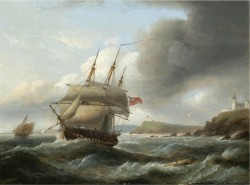
Becoming an admiral in the Regency era was not just about being an expert sailor or a brave fighter. It was a strange mix of hard work, good luck, and a lot of waiting. In fact, the way the Royal Navy promoted its leaders was one of the most unusual systems in history. It was a world where an Admiral could be a hero like Horatio Nelson, or someone who just lived long enough to get the job.
Starting as a Young Gentleman
The journey to the admiralty usually began when a boy was only twelve to fourteen years old. These boys joined the Navy as midshipmen. They were expected to learn shipboard skills, from tying knots to navigation by the stars. They did not have a formal rank yet; they were essentially apprentice officers. To move up, a midshipman had to serve at least six years at sea.
On presenting himself as a candidate for commissioning, the midshipman would also be asked to show his personal logbooks for the ships in which he had sailed. Then he would take an examination on the topics of writing, mathematics, astronomy, navigation, seamanship and gunnery. Not all midshipmen passed the test.

If he passed the test, the hopeful lieutenant would then have to apply for commission on a specific ship in order to take his new rank. This was the stage when the influence of a powerful friend or family member could open the way for commissioning. If he did not receive a post on the ship he applied for, he would remain a midshipman until he eventually applied for a post and received it. Many men were never commissioned, though.
Once a man made lieutenant, the prospect of further promotion, even to the level of Admiral, was possible. However, many men stayed lieutenants their whole lives because there were limited higher-ranking positions available.
The Magic Moment of Making Post
The most important milestone in a naval officer’s career was advancing to post-captain. In the Regency era, anyone in charge of a ship was called captain out of respect.
A post-captain was a formal military rankabove a commander and below an admiral. The term expressed that the officer’s name was “posted” in the official Navy List, meaning they were a fully commissioned captain guaranteed future seniority-based promotion to flag rank.

Once a man was on that list, his future would be decided by a strict system of seniority. One could not be promoted until those above them on the list had either died, retired, or been promoted themselves. If a man could stay alive and avoid getting into major trouble with the law, he was almost guaranteed to become an admiral eventually.
While the system of promotion by seniority alone seems fraught to modern eyes, it was designed to prevent people from cheating their way to the top using family connections, as often happened in the Army.
Almost, but not Quite
Before a captain became an admiral, he could serve as a commodore, which was a temporary rank for a senior captain commanding a fleet of ships, effectively acting as an admiral without the actual rank to go with it.
During the Napoleonic era, the Royal Navy established two distinct classes of commodores to manage fleets. Commodore Second Class was a senior post-captain who commanded a squadron but still personally commanded his own flagship. He received extra pay but did not have a dedicated captain under him. Commodore First Class was a prestigious appointment where the officer acted purely as a squadron commander. He was allowed to appoint a junior post-captain to manage his flagship, freeing him to focus entirely on naval strategy. Because it was an appointment rather than a rank, when the squadron was dissolved or the officer was recalled, he reverted to being a regular post-captain on the seniority list.
The World of Flag Officers
When a captain finally reached the top of the seniority list, he became a flag officer, one of several ranks of admiral.
The Navy was divided into three squadrons: Blue, White, and Red. A new admiral started as a Rear-Admiral of the Blue, which was the lowest level. As he got older and people above him died or retired, he would move up to the White Squadron and then the Red. After that, he could be promoted to Vice-Admiral of the Blue and start the process all over again. Once a man rose through the ranks to Vice-Admiral, his next step would be Full Admiral of the Blue, White and Red.
The highest possible rank was Admiral of the Fleet. Until 1864, only one single officer could hold the title at any given time. It was not awarded for specific tactical victories, but rather to the single most senior officer at the very top of the Navy List. He was regarded as Commander-in-Chief of the entire navy.
Because promotion was strictly based on seniority, an officer usually had to survive into their 70s or 80s for everyone ahead of them on the list to die before they could claim the title. Once an officer achieved this rank, they held it for life. They never retired, though they rarely went to sea at such an advanced age.
Life at the Top of the Fleet
Admirals were expected to maintain a certain lifestyle while on board their ships. They brought their own fine china, silver, and even their own cooks from home. They often hosted grand dinners for other officers and local leaders when they were in port. While the Navy did not pay them enough to cover these costs, many admirals became wealthy through prize money.
When an enemy ship was captured, the value of that ship and its cargo was split among those involved in its capture. The admiral got a one-eighth share of the net proceeds from any enemy ships and cargo captured by a vessel under their command. Though an individual captain’s share was greater than the admiral’s, admirals took shares from many vessels, and the shares could add up quickly.
Not Blue, White or Red, the Yellow Admirals
Because the seniority system was so rigid, the Navy sometimes ran into a problems. A man might be next in line to become an admiral, but he might not be good enough to lead a fleet in war. To resolve this dilemma, they created a rank colloquially known as a yellow admiral. Officially, these men were promoted to Rear-Admiral, but they were not assigned to any of the three active squadrons. Instead, they were ’beached’, which meant they were officially retired and permitted to keep the title and receive half-pay. It was a polite way of saying thank you for your service, but please stay home so someone more capable can do the job.

*oil on canvas
*127 x 101.5 cm
*inscribed b.l.: Rear Admiral / Richard Edwards
*1780
Retirement and the Half-Pay System
In the early 1800s, there was no such thing as a formal retirement age or a pension plan for naval officers. Instead, the Navy used a system called half-pay. When a ship’s mission was over and it was sent back to port, the officers were technically out of a job. However, the Navy wanted to make sure these experienced men would come back the next time their services were needed.
To keep them available, the government paid them half of their normal salary while they lived at home. Many admirals spent years, or even decades, on half-pay. In 1814, for example, there were 187 flag officers in the Royal Navy, but only 43 of them were actually at sea. The rest were living in the countryside, waiting for the Navy to call them back or simply waiting to move up the seniority list as they grew older. In 1836, formal retirement pensions were finally created for all officers.
Learn more about Gentlemen here
Learn more about the Army here
Learn more about the Navy here
References
Brouwer, R., ed. 2003. “The Navy at the time of James Cook.” Captain Cook Society. https://www.captaincooksociety.com/cooks-voyages/overview/the-navy-at-the-time-of-james-cook .
Christy, Gabe. “How the Other Side Ate: Meals of Royal Naval Officers During The Napoleonic Wars.” War History Online. March 11, 2018. https://www.warhistoryonline.com/history/meals-royal-navy-napoleonic-wars.html
Constable, Lyndsay. “On The Sea: Pirates, Privateers, and Navy Officers.” Quills & Quartos Publishing. October 15, 2025 https://www.quillsandquartos.com/blog .
Hayes, David. “Ranks & Duties.” Historic Naval Fiction. Accessed August 19, 2026. https://www.historicnavalfiction.com/general-hnf-info/naval-facts/ranks-duties .
Knowles, Andrew. “Regency History Guide to Ranks in the Royal Navy.” Regency History. January 25, 2025. https://www.regencyhistory.net/blog/royal-navy-ranks-regency-history-guide .
Macquarie University. “Naval Officers and Crew.” Lachlan and Elizabeth Magazine. 2011. https://www.mq.edu.au/macquarie-archive/lema/maritime/officers-and-crew.html
Millar, Stephen. “Promotion in the Flag Ranks in the Royal Navy during the Napoleonic Wars.” The Napoleon Series. March 2008. https://www.napoleon-series.org/military-info/organization/Britain/Navy/c_flagranks.html .
Waller, Ian. 2021. “Tracing Royal Navy Officers’ Service Records.” REALLY USEFUL Bulletin No 11. https://www.exploreyourgenealogy.co.uk/files/313-1-1.pdf
Becoming an admiral was a long, tedious affair.