
Laudanum: Panacea of Withered Poppies
In Mistaking Her Character Dr. Bennet must deal with the issue of Laudanum. Let’s take a closer look.
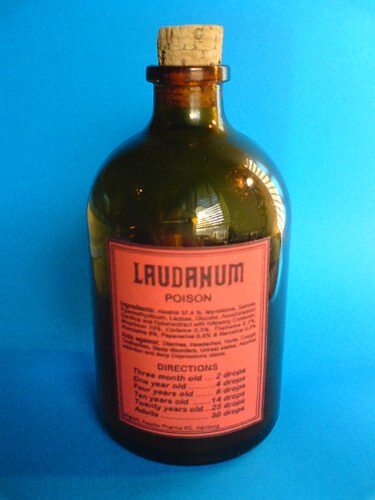
Although we commonly consider drug addiction and abuse a modern world problem, it began in far earlier times. The 16th century discover of laudanum by alchemist Paracelus, and its subsequent rediscovery in 1660 by English physician Thomas Sydenham set the stage for the opium trade of the following centuries.
The name laudanum comes from the Latin verb laudare- to praise. The tincture was widely praised for its ability to relieve pain, cough and diarrhea. By the 18th century, George Young published Treatise on Opium, a text that exalted the virtues of laudanum and recommended the drug for a broad range of ailments. In an era when cholera and dysentery regularly ripped through communities, killing victims with diarrhea, and dropsy, consumption, ague and rheumatism were all too common, laudanum’s popularity is easy to understand.
By the 19th century laudanum was also recommended to promote sleep, reduc anxiety, check secretions as well as treat colds, meningitis, cardiac disease, yellow fever and relieve the discomfort of menstrual cramps. Nursery maids even gave it to colicy infants.
Homemade Laudanum
Ease of acquisition further fueled laudanum’s popularity. The opium poppy could be raised in home gardens and its pods used to prepare the tincture in one’s own kitchen or stillroom.
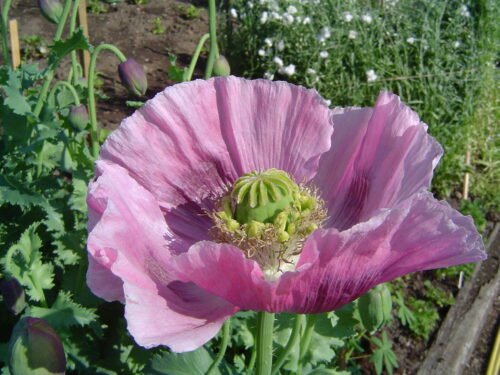
The Receipt Book (1846) of The Honourable Ellen Jane Prideaux-Brune lists a receipts several home remedies based upon it home brewed laudanum
For rheumatism
One spoonful of gum-guacum mixed with two teaspoonfuls of milk, add six drops of laudanum, and take it three times a Day. This is the quantity for one taking.
For a cough
Two tablespoonfuls of vinegar, Two tablespoonfuls of Treacle 60 drops of Laudanum. take a teaspoonful of this mixture night and morning.
Popular medical books for the era also offered laudanum receipts, including these for dysentery:
1) Thin boiled starch, 2 ounces; Laudanum, 20 drops; “Use as an injection every six to twelve hours”;
(2) Tincture rhubarb, 1 ounce; Laudanum 4 drachms; “Dose: One teaspoonful every three hours.”
And this for diarrhea:
Tincture opium, deodorized, 15 drops; Subnitrate of bismuth, 2 drachms; Simple syrup, 1/2 ounce; Chalk mixture, 1 1/2 ounces, “A teaspoonful every two or three hours.
Laudanum in Patent Medicine
Laudanum found its way into many patent medicines where it would be combined with everything from spices to tincture of cannabis to chloroform. Such formulations were marketed as cures for migraines, diarrhea, insomnia, and neuralgia, consumption, dysentery, “women’s troubles,” and nervous afflictions.
Perhaps more troubling were patent formulations made specifically for children. Steedman’s Powder quieted teething babies. Infants’ Quietness, Soothing Syrup, and Godfrey’s Cordial, calmed colic and fretfulness even in newborns. Some of these potions enjoyed such wide spread popularity that nearly all the families of a county might use them, despite the inherent danger of death by overdose. In very small children even a few extra drops could kill.
Laudanum use, both in patent medicines and home remedies, was highest in the marshy, low lying fens. Frequent outbreaks of marsh fever led fen-dwellers to seek relief where ever they could find it. Laudanum was far less expensive than the antimalarial quinine, so the opiate became the medicine of choice. Laudanum’s euphoric effects kept marsh fever suffers coming back for the drug even after they recovered from the fever. Many became addicted.
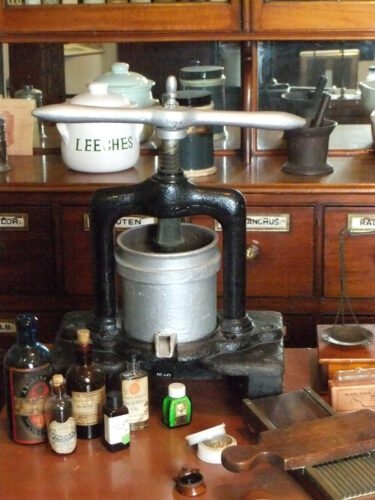
Addiction
As early as 1700, the medical community knew of opium’s addictive nature. Dr. John Jones’s medical treatise, Mysteries of Opium Reveal’d, was probably the first work on the subject describing in accurate terms the “dull, mopish and heavy disposition,” as well as memory loss and agonizing withdrawal symptoms common to opium users.
Dr. Jones explained that once the honeymoon period in which opium users tended to be over-achievers known for their “expediteness in dispatching and managing business, self-assurance, courage, contempt of danger, and satisfaction” ended “intolerable distresses” would set in, including respiratory depression or distress, constipation, and intense itching
Over time, the addict would require more and more laudanum to achieve the same desirable euphoric effects. Moreover, withdrawal from laudanum caused symptoms even worse than the side effects from use. At the mildest it produced cold-like symptoms, insomnia, muscular aches and abdominal cramps. In more severe cases it could result in life threatening cardiac arrhythmia, seizure, and stroke.
Since it was available at chemists, groceries and pubs, at under a penny for a quarter ounce, there was little pressure for addicts to stop using.
Legislating Laudanum
In the Victorian, era as laudanum use spread to Britain’s upper and urban working classes, wide public debate raged. Advocates emphasized the drug’s beneficial uses as well as England’s active opium trade to China.
Many doctors, however, expressed concern. Some feared that indiscriminate laudanum use masked the symptoms needed to diagnose other illness, caused accidental poisonings, and induced suicides. Worse still, laudanum withdrawal and overdose symptoms were treated with laudanum itself.
These concerns resulted in the 1868 Pharmacy Act. The act required that only registered chemists and pharmacists could sell opium derivatives. Although the amount and frequency of sales were unrestricted, each bottle had to be clearly labeled as poison. Later legislation required pharmacists to know customers personally, and to meticulously record each narcotic sale. However, it was not until well into the 20th century that opiate use in Britain and abroad drastically declined.
References
Laudanum http://amselbird.com/laudanum/
Victorian Medicine: Use of Laudanum and Treatment of the Sick
http://freepages.family.rootsweb.ancestry.com/~treevecwll/vicmed.htm
Laudanum The Heroin of the 19th Century http://redroom.com/member/frank-sanello/writing/laudanum-the-heroin-of-the-19th-century>
Alexander Marcet. An Account of the Effects produced by a large quantity of Laudanum taken internally, and of the means used to counteract those effects. Medico-Chirurgical Transactions. 1809; 1: 77–82. PMCID: PMC2128802 http://www.ncbi.nlm.nih.gov/pmc/articles/PMC2128802/
Laudanum Detox and Withdrawal http://www.projectknow.com/research/laudanum-detox-and-withdrawal/>
Withdrawal from Laduanum http://www.withdrawal.net/learn/laudanum/
Side effects of laudanum http://www.livestrong.com/article/95368-side-effects-laudanum/
Comments
Laudanum: Panacea of Withered Poppies — No Comments
HTML tags allowed in your comment: <a href="" title=""> <abbr title=""> <acronym title=""> <b> <blockquote cite=""> <cite> <code> <del datetime=""> <em> <i> <q cite=""> <s> <strike> <strong>