
The Taxed Cart: The Budget Ride of Regency England
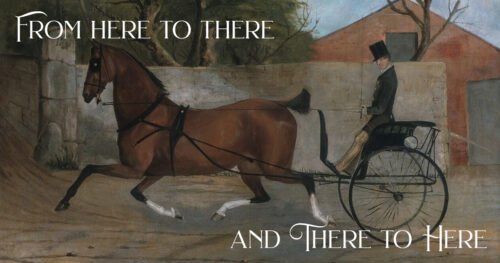
If a Regency gentleman owned a matched pair of carriage horses, everyone noticed and understood what it meant about his wealth and place in the social order. If a farmer owned a taxed cart, everyone also noticed and understood exactly where he stood. Just as with transportation today, how you got from here to there said a great deal.
The taxed cart was the practical person’s transportation, plain, useful, and shaped as much by government policy as by daily necessity. The taxed cart existed because lawmakers decided that luxury vehicles should cost more to operate. That decision quietly shaped the appearance of roads across England.
What Exactly Was a Taxed Cart?
A taxed cart, sometimes called a tax cart, was a simple two-wheeled horse-drawn vehicle that qualified for a lower rate of tax than more comfortable passenger carriages. Carriages with springs, cushions, and decorative features were treated as luxury goods and taxed more heavily. Rough agricultural carts were taxed lightly or sometimes exempt, which encouraged practical people to choose plain construction over comfort.
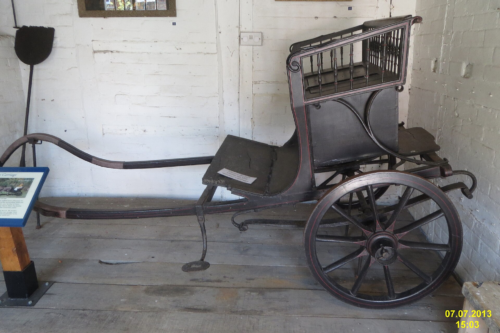
A taxed cart usually consisted of a simple wooden frame mounted on two wheels and pulled by a single horse. Unlike more refined vehicles, taxed carts lacked springs, meaning passengers felt every bump in the road. The body was typically open, with minimal seating. Some versions allowed the driver to sit on a narrow board or even on the goods being transported. Others required the driver to stand or walk alongside the horse.
Construction materials tended toward practicality.
“By law, taxed carts were plain and devoid of ornament, springs, or cushions. In the 1808 schedule, vehicles qualified only if they were unadorned and built and constructed wholly of Wood and Iron, without any Covering other than a tilted Covering, and without any Lining or Springs, whether the same be made of Iron, Wood, Leather, or other Materials, and with a fixed Seat, without Slings or Braces, and without any Ornament whatever, other than Paint of a dark Colour for the Preservation of the Wood or Iron only.”
~Taxed Carts 1883.
Owners were even required to paint the words ‘A Taxed Cart,’ and the owner’s Christian and surname, and place of abode, on a black ground in white letters, or on a white ground in black letters, on the outside of the back panel or back part of such carriage, in words at full length, each of the letters thereof being at least one inch in length, and of a breadth to show it qualified for the lower tax rate. (Harris, 2021)
Exact prices varied depending on craftsmanship and materials, but taxed carts were among the cheapest horse-drawn vehicles available. Their simple construction kept initial purchase costs lower than vehicles designed for comfort. The main financial commitment remained the horse. Feeding, shoeing, and housing the animal required ongoing expense. Even so, choosing a taxed cart instead of a more elaborate carriage reduced the financial burden significantly.
Who Used a Taxed Cart?
During the Regency, taxed carts appeared most often in rural areas. Farmers used them to carry produce to market. Tradesmen used them to transport goods between villages. Small landowners used them for errands and local travel.
Because the taxed cart could carry both goods and passengers, it served mixed purposes. A family might ride to church on Sunday and haul feed or tools during the week. This flexibility made the vehicle especially attractive to the middling classes. For those unable to afford a gig, phaeton, or carriage, the taxed cart provided independence at a manageable cost.
Taxed carts were most commonly associated with farmers, tradesmen, and practical professionals. Shopkeepers, millers, and craftsmen might own one. A modest country clergyman might rely on one for visiting parishioners.
Members of the gentry rarely used taxed carts as their primary vehicle, though they might keep one for farm management. The appearance alone signaled thrift rather than fashion.
Read more about transportation during the Regency Here
References
Harris, Jocelyn. “Jane Austen, the Artful Tax Dodger.” Los Angeles Review of Books, December 15, 2021. https://lareviewofbooks.org/short-takes/jane-austen-the-artful-tax-dodger.
“Taxes (New!).” Nancy the Regency Researcher. Accessed March 23, 2026. http://www.regencyresearcher.com/pages/tax.html.
“Taxed Carts.” Hansard, House of Commons Debates, February 18, 1833. Accessed March 23, 2026. https://api.parliament.uk/historic-hansard/commons/1833/feb/18/taxed-carts.
Comments
The Taxed Cart: The Budget Ride of Regency England — No Comments
HTML tags allowed in your comment: <a href="" title=""> <abbr title=""> <acronym title=""> <b> <blockquote cite=""> <cite> <code> <del datetime=""> <em> <i> <q cite=""> <s> <strike> <strong>