
World Chocolate Day: Chocolate as Medicine
Today is World Chocolate Day. Celebrated globally, it commemorates the date chocolate was first introduced to Europe in 1550. But chocolate’s rich history extends far beyond its European connections.
Chocolate in the Americas
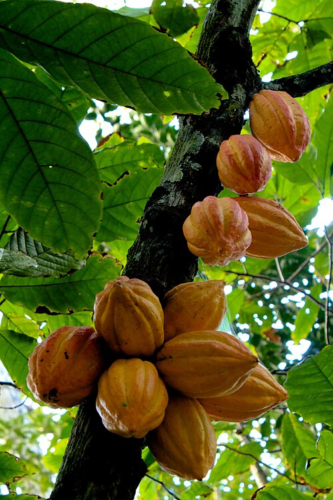
Chocolate begins with the plant Theobroma cacao, a name given in the 18th century by the Swedish naturalist Carl Linnaeus. The name translates to food of the gods.
Cultures in Central America—including the Olmec, Maya, and Mexica (Aztec)—treated cacao as a ritual article not a snack. The earliest evidence suggests cacao beverages were used in ceremonies, marriage negotiations, alliance-building, and religious observances.
These ancient forms of chocolate bore little resemblance to the modern candy bar. The drink was bitter, often mixed with maize, spices, or flowers, and sometimes served cold and frothy. The Maya word kakaw eventually became the Nahuatl cacahuatl, and from there we arrived at “cacao” and “chocolate.”
When Spanish explorers encountered cacao in the 16th century, they did not merely bring back beans. They imported a medical tradition.
Chocolate in medicine
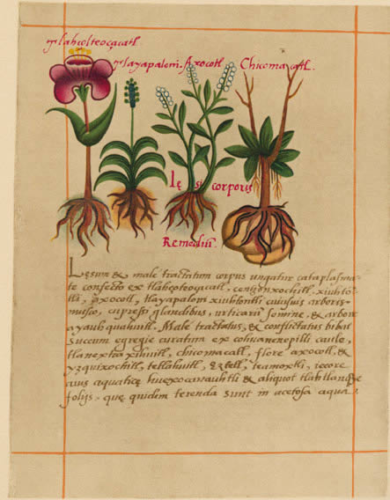
The 1552 Badianus Codex, translated into Latin from a Nahualt text of medicine and botany, documented cacao’s use for fatigue and weakness. Later, the 1590 Florentine Codex, a 16th-century ethnographic research study in Mesoamerica by the Spanish Franciscan friar Bernardino de Sahagún, described cacao mixtures prescribed for fever, shortness of breath, and general debility.
European physicians embraced chocolate enthusiastically. By the 1600s, it was recommended for digestive complaints, low energy, melancholy, and what physicians delicately termed “female troubles.” It appeared in pharmacies across Europe as a restorative substance, often compared to milk in its ability to strengthen the body. Some even argued it could rejuvenate aging women and inspire romantic enthusiasm.
A few other interesting notes in the history of medicinal chocolate include:
Being Fattening Was Once Its Greatest Virtue
For centuries, chocolate was the primary treatment for “wasting diseases” like tuberculosis or general emaciation, high fat, extra calories and tastes good what’s not to love? Seventeenth-century writers like James Wadsworth even promised that drinking it would make a person “fat and corpulent,” which at the time was considered healthy and desirable
Chocolate Broke the Ancient Medical System
The early European approach to medicine relied on the system of humors by Galen. Galen taught that every illness and food as a balance of hot, cold, wet, or dry. When chocolate arrived in Europe, it threw this entire worldview into chaos because scholars couldn’t agree on how to categorize it. Depending on its form—bean, powder, or fatty drink—it seemed to exhibit contradictory qualities of being both cold and dry or hot and wet. Some historians argue that this confusion actually helped accelerate the end of the ancient humoral system, possibly even paving the way for modern pharmaceutical science.
Chocolate made the Medicine Go Down
In the nineteenth century, pharmacies were filled with useful but revolting remedies derived from bitter plant like morphine and quinine. Pharmacists discovered that if they ground cocoa beans into a thick, sugary syrup, they could mask the mouth-puckering flavor of these medicines. This was the actual birth of chocolate syrup, which was advertised to druggists long before it ever graced an ice cream sundae—it made a “bitter pill” easier to swallow.
The Religious Fasting Loophole
As chocolate grew in popularity in Christian Europe, it sparked a heated religious controversy: did drinking it break a fast? Because chocolate was so thick and nourishing, many argued it was a food, while others insisted that since it was consumed as a liquid, it was merely a beverage. Eventually, in 1662, a high-ranking Cardinal declared that “liquid does not break a fast” effectively allowing the faithful to consume chocolate during periods of religious abstinence.
So maybe my go-to dark chocolate really is medicine for the soul.
Read more about the history of chocolate.
References
“Chocolate: A Cure for All Ills?” Chocopedia – Cocoa Runners. Published November 10, 2024. https://cocoarunners.com/chocopedia/chocolate-history-of-medicine/https://randombitsoffascination.com/tag/chocolate/
Coe, Sophie D., and Michael D. Coe. “Centuries of Seeking Chocolate’s Medicinal Benefits.” The Lancet 376, no. 9743 (2010): 1522–1523. https://www.thelancet.com/journals/lancet/article/PIIS0140673610610999/fulltext
Danziger, Pamela. “The Unlikely Medical History of Chocolate Syrup.” Smithsonian Magazine, September 6, 2017. https://www.smithsonianmag.com/science-nature/unlikely-medical-history-chocolate-syrup-180964779/
Dillinger, Teresa L., Patricia Barriga, Sylvia Escárcega, Martha Jimenez, Diana Salazar Lowe, and Louis E. Grivetti. “Chocolate in History: Food, Medicine, Medi-Food.” International Journal of Medical Science 10, no. 3 (2013): 193–203. https://pmc.ncbi.nlm.nih.gov/articles/PMC3708337/
Grivetti, Louis E. “Food of the Gods: Cure for Humanity? A Cultural History of the Medicinal and Ritual Use of Chocolate.” The Journal of Nutrition 130, no. 8 (2000): 2057S–2072S. https://www.sciencedirect.com/science/article/pii/S0022316622143798
Katz, David L., and Kim Doughty. “Cocoa and Chocolate in Human Health and Disease.” Antioxidants & Redox Signaling 15, no. 10 (2011): 2779–2811. https://pmc.ncbi.nlm.nih.gov/articles/PMC4696435/
Meyer, Katrin, and Erin O’Connor. “When Chocolate Was Medicine: Colmenero, Wadsworth, and Dufour.” The Public Domain Review, January 28, 2015. https://publicdomainreview.org/essay/when-chocolate-was-medicine-colmenero-wadsworth-and-dufour/
Samanta, Sharmistha, Tanmay Sarkar, Runu Chakraborty, Maksim Rebezov, Mohammad Ali Shariati, Muthu Thiruvengadam, and Kannan RR Rengasamy. “Dark chocolate: An overview of its biological activity, processing, and fortification approaches.” Current Research in Food Science 5 (2022): 1916–1943. https://pmc.ncbi.nlm.nih.gov/articles/PMC9589144/
I truly love your commentaries. We just completed a chocolate tour in Zurich and they were very thorough on the history of chocolate in Europe. And – many of the new chocolatiers are going from bean to bar in their processing, rather than buying cacao beans already roasted. They claim gently processing the beans, and not using the hulls, eliminates the bitterness of the original processing.
I didn’t know that! Thanks for sharing!