
Widows, Widowers and Remarriage
In Remember the Past, widower and widow must navigate future possibilities. But what did that look like?
Jane Austen’s works were populated with numerous widows representing all walks of life. From the very poor to the very well off, death of a spouse was a common experience.
Widowers
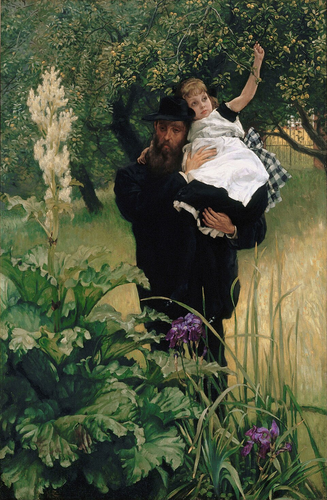
As in life, marriage did not affect men and women equally in death. It is no coincidence that all Jane Austen’s widowers were neither impoverished nor dependent upon the kindness of others for survival. Widowers rarely faced financial difficulties due to the loss of their spouse. The only Austen widower who faced financial hardships was Sir Walter Elliot of Persuasion. Ironically, his financial issues were caused by the lack of his wife’s prudent household management.
Outside of problems like these, though, widowers experienced little financial change at the death of their wives. He retained a life interest (curtesy) in all his dead spouse’s land, not just the one third specified by dower laws. (Curtesy is a principle in common law in England and early America by which a widower could use property held in his deceased wife’s name until his own death, but could not sell or transfer it to anyone but the children of his wife. (Johnson,-Lewis)) At his death (and not before), the property would go to his wife’s heirs.
Mourning protocols for widowers did not include the extensive restrictions experienced by women. They were not expected to dress in mourning garb nor delay remarriage for at least a year. Widowers frequently remarried quickly, without societal censure, especially if he was left with young children.
Widows
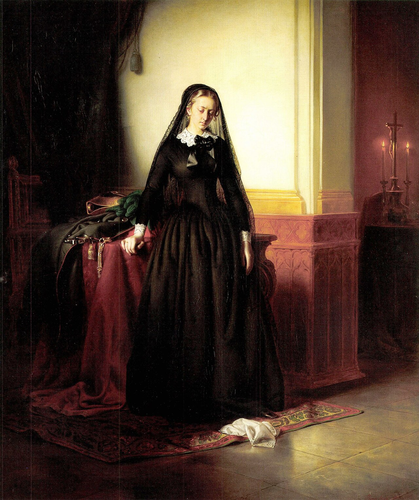
When a woman’s husband died, she was expected to spend a full year (long enough for a baby conceived in her marriage to be born) in full or deep morning. Many conduct writers suggested a widow should continue to live a life of somber retirement for the remainder of her life. Without the man who defined her legal personhood, society had a difficult time understanding what to do with her. Keeping her out of sight and out of mind was one way of dealing with that.
Remarriage
While men often remarried quickly after the death of their wives with nary an eyebrow raised, women faced varying degrees of opposition to remarrying. Custom decreed that they should spend a year in deep mourning for their husband, so a woman who married sooner than that was extremely suspect. Conduct manuals strongly urged widows to honor their husband’s memories rather than go about looking for further married felicity. After all, one could not reasonably expect to be fortunate enough to find two good husbands in a single lifetime, right?
Soldiers’ wives, especially those who ‘followed the drum’ and accompanied their husbands on deployment often remarried within days or even hours of their husband’s demise. They were deeply criticized as hardened, unfeminine creatures. The choice though was usually one of necessity. Not only would a widow lose her husband’s income, but if she followed her husband on deployment and worked in the camp as she would be expected to do, she would lose both her privilege of working there and her way home without her husband. Finding another husband was a matter of survival for her.
Society though, was more apt to consider the remarriage a consequence of voracious sexual appetite. The prevailing belief was that once a woman was introduced to sexual activity, she would be consumed by lust. This makes the character of Lady Susan a much more understandable choice; Jane Austen was merely portraying the contemporary stereotype of a widow—a woman on the prowl to fulfill her baser motives.
Men who remarried were also eye with suspicion, especially when considering older widows. For when
…old Women marry young Men. Indeed, any Marriage is in such, a Folly and Dotage. They who must suddenly make their Beds in the Dust, what should they think of a Nuptial Couch… But this Dotage becomes perfect Frenzy and Madness when they choose young Husbands; This is an Accumulation of Absurdities and Contradictions. The Husband and the Wife are but one Person; and yet at once young and old, fresh and withered. It is reversing the Decrees of Nature. (The Whole Duty of a Woman, 1737)
The only possible reason a man could want to marry an older widow would be for her money. Such fortune hunting, though, was generally frowned upon. A wealthy virgin though, she would be an entirely acceptable choice.
Comments
Widows, Widowers and Remarriage — No Comments
HTML tags allowed in your comment: <a href="" title=""> <abbr title=""> <acronym title=""> <b> <blockquote cite=""> <cite> <code> <del datetime=""> <em> <i> <q cite=""> <s> <strike> <strong>