
The Dog Cart: The Regency SUV
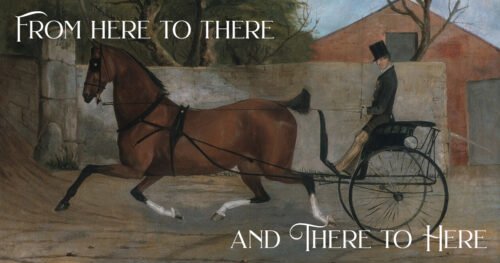
The Regency era had its own version of a utility vehicle called the dogcart, a light and practical carriage that became a favorite for those living in the country. It was built for work and sport rather than just for showing off in the city parks. While it started out with one specific job in mind, it soon became a tool that helped families manage their estates and travel to nearby villages.
A Clever Design for Sporting Dogs
The dogcart got its name, not because it was pulled by dogs, but because it was created to transport hunting dogs to the field. Gentlemen who enjoyed shooting or coursing did not want their dogs to get tired by running all the way to the hunt. To solve this problem, coach-makers designed a special vehicle with a large box or boot built into the frame.
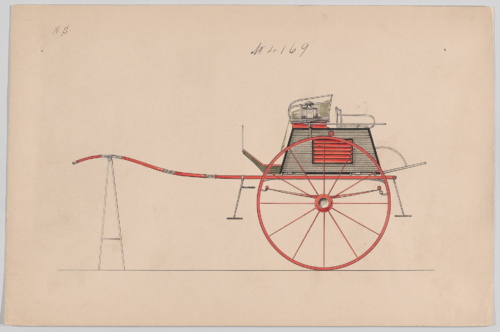
This boot was placed under the seats or behind the driver. The most important feature of this dog boot was the use of Venetian-slatted sides. These overlapping wooden slats allowed fresh air to flow through the box so that the dogs could breathe easily during the ride. The slats were adjustable to protect the animals from rain or cold winds. The back of the boot usually had a door that could be lowered like a tailgate, making it easy to get the dogs in and out.
Dog Cart Design
Most dog-carts featured a unique seating arrangement known as back-to-back or dos-à-dos seating. This meant that the driver and one passenger faced forward, while two other passengers sat behind them facing the rear. Some larger versions could even hold up to six people.
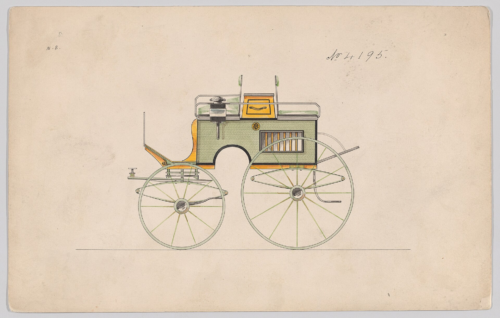
Because they were made for the country, dog carts were built to be tough but light. There were two main types of dog-carts used during this time. The two-wheeled version was based on a gig. The four-wheeled version was based on the phaeton, which was a sportier and more stylish carriage. Unlike the very expensive luxury coaches, the dog-cart was often painted in two bright or contrasting colors. Popular choices included black with red, black with yellow, or yellow with green.
Who Drove These Vehicles?
At first, the dog-cart was used almost entirely by sporting gentlemen and young men who wanted to look fashionable. These “young bloods” or “blades” liked the dog-cart because it was faster and easier to handle than a heavy coach. Even though it was a less expensive option than a grand chariot, it still carried a certain social status because it showed that the owner was an active outdoorsman. It was common to see a small groom, often called a tiger (another status symbol), standing on a platform at the back of the cart to help with the horses or the dogs.
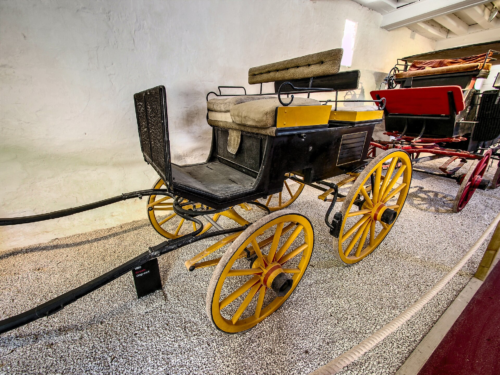
Photographed at Château de Chenonceau, France. 26 April 2017, Alf van Beem. Public domain
Eventually, women and families saw how useful the cart was for daily life.
Versatility on Country Estates
One reason the dog-cart became so popular was that it could be used for much more than just hunting. When the dogs were not inside, the ventilated boot became a perfect place to carry groceries from the village or luggage from the local inn. It was even used for charity work, such as carrying food and clothing to poor neighbors. Because the two-wheeled variety was light and well-sprung, it could be pulled by a single horse, or if needed, a pair of horses harnessed one in front of the other. This made it much cheaper to keep than a large coach that required four or six heavy horses.
A Safe and Sturdy Way to Travel
Traveling in the early 1800s was often dangerous because the roads were full of mud and deep ruts. Many two-wheeled carriages were famous for tipping over if the driver took a turn too fast. However, the two-wheeled dogcart was surprisingly stable. It had a lower center of gravity, which kept it steady on uneven ground. Even if one wheel lifted off the road during a sharp turn, the other wheel would usually stay in contact with the dirt, preventing a serious crash. This safety feature made it a great choice for less experienced drivers. The dogcart was so successful as a utility vehicle that its design stayed popular for almost a hundred years, and some of the very first motor cars were built to look just like it.
I knew dog carts were used for hunting dogs. I had not realized they were used for everyday purposes as well. Did you learn anything new? Tell me in the comments.
Read more about transportation during the Regency Era here.
References
The reference section for this series is VERY long, so you can find it HERE.
Comments
The Dog Cart: The Regency SUV — No Comments
HTML tags allowed in your comment: <a href="" title=""> <abbr title=""> <acronym title=""> <b> <blockquote cite=""> <cite> <code> <del datetime=""> <em> <i> <q cite=""> <s> <strike> <strong>