
Vicars and Curates
Darcy’s Decision features a VIP–very important vicar. Let’s dig more into who they were and what they did!
Vicar
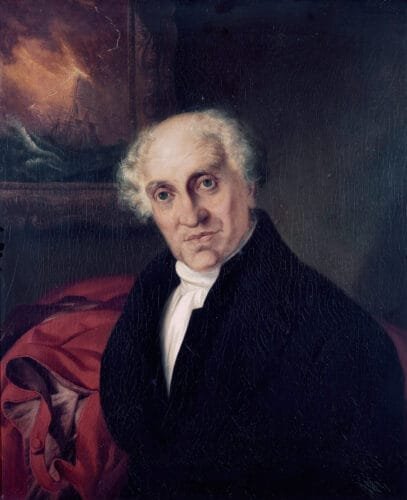
The vicar is the more commonly encountered cleric. Though some parsons might have been devoted to their flock, the church on the whole had a reputation for idleness. Sincere faith was not a necessary quality for ordination as a minister of the Church of England. With enough money and connections a man might be ordained and installed in a desirable living. A living, (a parish church), was typically set up so that a rector or a vicar presided. In the Regency period, once installed in a living, a man was there for life. No one less than the bishop could remove him for cause. An income and home for life would certainly be appealing; however, the if the holder of the living wished to retire he had to employ a curate to take charge of a parish
Whether or not a vicar had the resources for hiring a curate depended on the parish itself. His portion would be the lesser tithes, 10% of the parish’s produce and livestock. In some vicarages this might be as little as £50 a year. (For reference, this is roughly the equivalent of a minimum wage job.) In other parishes, the lesser tithes could amount to a considerable sum. Some hints in Pride and Prejudice suggest the Kympton living might have amounted to £500 -£600 a year. A vicar could resign his duties to a curate once he obtained the permission of his bishop. Many hired a curate, who would be paid out of the vicar’s own pocket, from the beginning of their incumbency. Others only did so when they had to retire. A vicar did not have to give up the parsonage house to the curate. He might continue to live in it himself and leave the curate to find his own living quarters somewhere within an easy distance of the church.

Curate
A curate was usually a young man just recently ordained, who assisted or sometimes performed the duties of a clergyman. Though they might do all the work of the parish, their salaries were often meager, perhaps as little as £50 per year, not enough to afford a maid. Even at trifling wages, a curacy was not easy to obtain. In the early 1800’s curates made up close to half of the clergymen. Even with a position, their future was not secure. The death of the incumbent did not imply the curate would ascend to the living. Moreover, there was no guarantee that the successor would even continue to employ the curate. A curate did not retire unless he had private means of support because the church offered no pensions. As members of the clergy, curates were regarded as gentlemen. Despite their official standing, the subservient nature of their position and their paltry incomes caused some of the gentry and peers to hold them in disregard.
For more information see:
Collins, Irene. (1998) Jane Austen, The Parson’s Daughter . Hambledon Press.
Collins,Irene. (2002) Jane Austen & the Clergy. Hambledon Press.
Day, Malcom. (2006) Voices from the World of Jane. Austen David & Charles .
Mayer, Nancy. Nancy Mayer-Regency Researcher
Sullivan, Margaret C. (2007) The Jane Austen Handbook . Quirk Books.
by Maria Grace Copyright 2013, all rights reserved
Comments
Vicars and Curates — No Comments
HTML tags allowed in your comment: <a href="" title=""> <abbr title=""> <acronym title=""> <b> <blockquote cite=""> <cite> <code> <del datetime=""> <em> <i> <q cite=""> <s> <strike> <strong>