
Sedan Chairs: The ultimate in private mobility
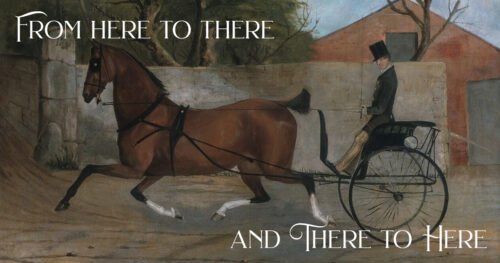
When we last checked in with Blue Order Historian Mr. Bennet in London, he had begun to use a sedan chair to get around because of his advanced arthritis. But what was a sedan chair?
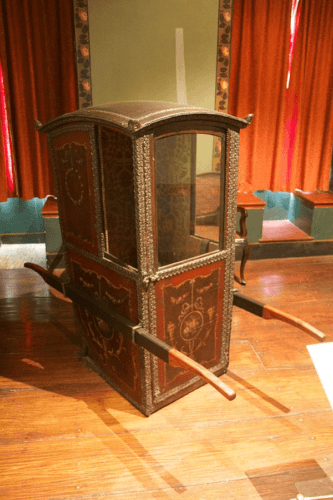
Sedan chair. Made in Europe in the 18th century. At the Castle of Good Hope, Cape Town. Photograph by Mike Peel (www.mikepeel.net)., CC BY-SA 4.0 , via Wikimedia Commons
Sedan chairs came from the French town of Sedan where they were used first. They became popular in England during the 17th century. Essentially an enclosed box with a door and a seat, held up by two long poles, to be carried by two men, the sedan chair was a Georgian taxi.
The sedan chair was first introduced in the early 1600’s by the Duke of Buckingham, the public disapproved, complaining that the chairs made people do the work of animals. But they became popular in London for their ability to protect extravagant and fashionable wigs and gowns for much less than the cost of a hackney cab. In Bath, their popularity came from the number of infirm individuals there to take the healing waters, but unable to easily get to them.
Structural Features of Sedan Chairs
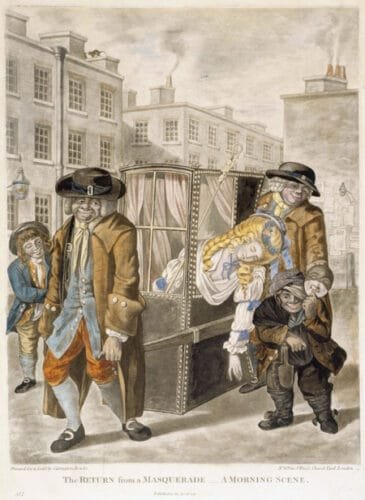
The Enclosure: A timber frame (often mahogany) covered in leather and secured with brass studs. Interiors featured padded armrests and raw silk curtains to provide privacy for the passenger.
The Hinged Access System: Because the chair sat low to the ground, it featured a hinged front door and a roof that could be raised, allowing the passenger to enter and exit in an upright position.
80-Inch Flexible Poles: Two long wooden poles were slotted into brackets on the sides. The poles functioned as organic leaf springs. The natural flexibility of the timber was calculated to absorb the vertical sway of the porters’ gait, protecting the passenger from the jarring of human walking. Before springs were routinely used in carriages, sedan chairs could offer a much smoother ride than a carriage.
Why take a sedan chair?
Though expensive, sedan chairs offered several advantages. Since London streets were notoriously dirty, traveling protected from the grime appealed to those who could afford it. The chairs were also fast and efficient as they were allowed to use the pavement and thus bypass hazards and traffic on the London roads. Sedan chairs were also very private—they could leave directly from the inside of a building and drop a passenger off inside another, protecting the privacy of the traveler. (An ideal quality when dealing with dragons and the Blue Order.)
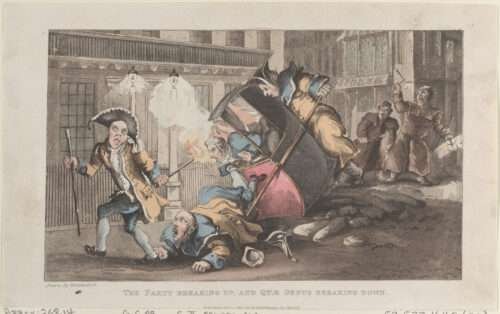
Even with these advantages, sedan chairs were prone to accidents. Pedestrians were supposed to give way to chairs, but even if the chair men called out warnings, they weren’t always heeded. Going around corners and going through intersections were apt to cause accidents.
As London grew, the use of sedan chairs waned with the city becoming too large to traverse by foot.
I think these sound a lot like the bike taxis/ rickshaws of today. What do you think? Tell me in the comments.
Read more about Sedan chairs, Bath Chairs, and other modes of transportation here.
References
Carriage Foundation. “Bath Chair.” Carriages of Britain. 2026.. https://www.thecarriagefoundation.org.uk/item/bath-chair-1
Carriage Foundation. “Invalid Carriage.” Carriages of Britain. https://www.thecarriagefoundation.org.uk/item/invalid-carriage-bristol
Davidson, Lucy. “When Was the Wheelchair Invented?” History Hit. April 14, 2022. https://www.historyhit.com/when-was-the-wheelchair-invented/
Doe & Hope. “A Wonderful Mid 19thC Invalid Carriage / Bath Chair c.1854.” Doe & Hope. Accessed February 26, 2026. https://www.doeandhope.com/en-us/products/a-wonderful-mid-19thc-invalid-carriage-bath-chair-c-1854
Living Made Easy. “UK Disability History Month: The History of the Wheelchair.” Living Made Easy. 2026. https://livingmadeeasy.org.uk/advice-articles/history-of-the-wheelchair
Love, Suzi. “18th-19th Century Sedan Chair Travel In Jane Austen’s Times.” Suzi Love (blog). May 25, 2024. https://www.suzilove.com/?p=19067
Museum of Bath at Work. “Bath Chair – Museum of Bath at Work.” BBC – A History of the World. 2014. https://www.bbc.co.uk/ahistoryoftheworld/objects/popk2AxUQ5iEpgTQqnPiiQ
Tenby Museum. “Victorian Bath Chair.” BBC – A History of the World. 2014. https://www.bbc.co.uk/ahistoryoftheworld/objects/5Wfs5HOZSaOexY_vaHpMRQ
Zhao, Grace. “Wheelchairs & The Developing World.” The Borgen Project (blog). July 29, 2013. https://borgenproject.org/what-could-the-wheelchair-do-for-the-developing-world/
Comments
Sedan Chairs: The ultimate in private mobility — No Comments
HTML tags allowed in your comment: <a href="" title=""> <abbr title=""> <acronym title=""> <b> <blockquote cite=""> <cite> <code> <del datetime=""> <em> <i> <q cite=""> <s> <strike> <strong>