
Born on the Wrong Side of The blanket
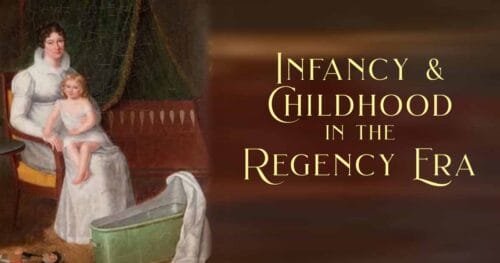
In the world of Regency England, where strict etiquette was the norm in society, certain secrets needed to be kept, especially concerning issues of parentage. Thousands of children born to parents not legally married were considered illegitimate in the eyes of the church and the law. Darcy Wrangles with this issue in Darcy’s Decision.
Children born in this situation were legally deemed a nullius filius, a Latin term meaning the ‘child of nobody.’ This meant that in the eyes of the government, the child had no legal family beyond their mother. Furthermore, that child began life with almost no rights to the things most children took for granted, like a last name or a family home.
The Struggle for Recognition and a Name
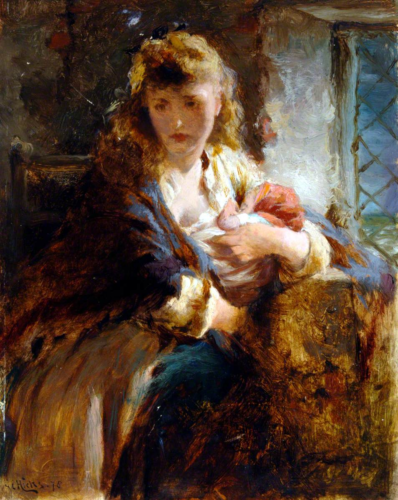
One of the biggest challenges for a child born outside of marriage—on the wrong side of the blanket, as the saying goes—was being recognized as belonging to a family. While everyone knew who the mother was, the father was a different story. Fathers often tried to hide their ‘natural children’ to protect their own reputations and avoid the cost of raising the child. Even if a father admitted the child was his, it did not change the law; the child remained illegitimate for their entire life, even if the parents eventually got married after the child’s birth.
A ‘natural’ child did not even have a legal right to use their father’s last name. Instead, they might be listed in church records as base born, natural, or even a bastard. (Fun fact: The word bastard was often used in legal papers and not always seen as an insult until around the year 1830.)
Inheritance and the Rule of No One
Property and financial laws did not serve a ‘child of nobody’ well. Normally, property in England was passed via primogeniture from a father to his eldest son. This kept large estates together for generations to ensure the family’s wealth and power did not dillute through the generations.
An illegitimate son, even if first-born, was skipped over in this process. He could never inherit a title from his father and could not inherit any property that was entailed to a title. If a parent named an illegitimate child in a will, that child could inherit land or (eligible) property. Without a specific mention in a will, the child would get absolutely nothing, and there was no legal recourse.
The Social Hourglass of the Elite and the Poor
The treatment a natural child received depended on how much money their family had. Generosity towards these children formed an hourglass-shaped distribution and compared to social class.
The wealthiest of the upper class often could afford to flaunt social rules. For example, the 5th Duke of Devonshire lived with both his wife and his mistress, and they all had children by different people. Their wealth and power allowed to flaunt behavior that would have ruined anyone else. In these high-society cases, illegitimate children were often acknowledged and lived fairly comfortable lives, even if they could not inherit the family title or property.
At the bottom of the hourglass were the very poor. For these families, birth status was often less important than the simple struggle to survive. Poor mothers often had to work as servants, which meant they could not keep their children with them. These children were often raised by their grandmothers or other relatives while their mothers worked to send money back home. With neither money, status, nor property at stake to inherit, the details of their birth were of little practical consideration.
The Judgment of the Middle Class
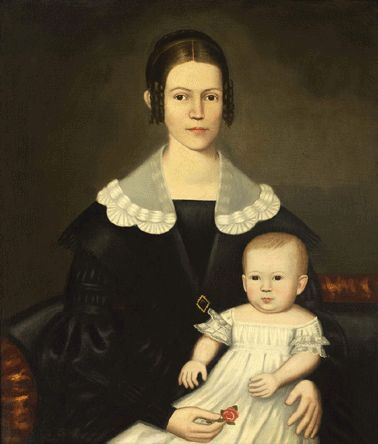
The middle part of the hourglass was the narrowest and the strictest. This group would have included people like the characters in Jane Austen’s novels, who were obsessed with their reputations and social standing. To them, a child born out of wedlock was a massive scandal that could destroy the family’s future.
Women in this social class were judged far more harshly than men. A single mistake could mean being shunned by all their friends and family. Middle-class families would go to incredible lengths to hide an illegitimate child, sometimes even sending the mother away under a false name so no one would find out the truth.
The Safety Net of the Poor Laws
For children whose parents could not or would not support them, a system of Poor Laws, laws were run by the local parish, might help.
A 1733 law forced unmarried pregnant women to name the father so the parish would not have to pay for the child’s care. The parish would then go after the father and make him pay a weekly sum of money for child support. If he refused to pay, he could be sent to jail. This approach was designed to save the taxpayers money, but it is easy to imagine the serious problems inherent in the system.
By the end of the Regency era, in 1834, the laws changed to shift the financial and moral burden of illegitimate to the mother, not the father, often forcing them into poorhouses. The purpose, it was said, was the stop the incentive (child support payments) for having children out of wedlock. The backlash was so severe, though, that Parliament revised these clauses by 1844, allowing mothers to once again sue fathers for support in certain civil contexts.
Social Cures for the Stigma
One of the most common tools for dodging the social stain of illegitimacy was boarding school. Parents would often enroll their children in schools far from home, sometimes under false names or by presenting them as the orphans of distant friends.
This allowed the child to receive a genteel education and learn the manners of the elite without the awkward presence of their “shameful” origins. Harriet Smith, in Jane Austen’s Emma, was such a child.Interestingly, many schools seemed to collude in this deception. Some institutions even gained reputations for being places where children in such predicaments could do well and eventually be introduced into polite society under a fresh identity.
For elite illegitimate sons who couldn’t inherit land or titles, the military offered a unique path to a respectable identity. The Royal Navy and the Army were spaces where a young man could earn a status based on his own merit and bravery rather than his birthright. A successful military career could bestow a publicly recognized rank that effectively canceled out the stain on his birth.
These men could re-enter the same social circles as their legitimate peers. It was a way for society to utilize the talents of these “outsiders” without disrupting the traditional laws of inheritance. Their military achievements became their new pedigree, allowing them to be remembered for their service to the state rather than the circumstances of their conception.
Shame or Stigma?
It is tempting to assume that illegitimate individuals lived lives of significant shame. However, the evidence from their own letters and diaries suggests something more complex. While there was certainly social stigma—an external label that marked them as different or inferior—many did not internalize this as personal shame.
Instead of self-loathing, many natural children felt a profound sense of frustration, often viewing themselves as inherently worthy while coping with unfair laws. They tended to blame their parents’ moral shortcomings or the rigidity of the legal system rather than their own self-worth, recognizing they were the innocent victims of a social game they hadn’t chosen to play.
Find out more about Regency Era Childhood here
Find out more about Regency Era Gentlemen here
Fnd out about Regency Era pregnancy and childbirth here
References
Bailey, Martha. 2015. “The Marriage Law of Jane Austen’s World.” Persuasions On-Line Vol. 36 No. 1. JASNA. https://jasna.org/publications-2/persuasions-online/vol36no1/bailey/ .
Gibson, Kate Louise. 2018. “Experiences of Illegitimacy in England, 1660-1834.” PhD thesis, The University of Sheffield. chrome-extension://efaidnbmnnnibpcajpcglclefindmkaj/https://etheses.whiterose.ac.uk/id/eprint/21476/1/Gibson%2C%20Experiences%20of%20Illegitimacy%2C%20ethesis.pdf
Knight, Jude. 2023. “illegitimate sons and succession.” Jude Knight Storyteller. October 20,2023. https://judeknightauthor.com/tag/illegitimate-sons-and-succession/ .
Nancy Mayer. “Illegitimacy.” Regency Researcher. Accessed August 16, 2026. http://www.regencyresearcher.com/pages/law2.html .
Lewis, Jesse. “Illegitimacy in Regency England.” Quills & Quartos Publishing. May 4, 2022. https://www.quillsandquartos.com/post/illegitimacy-in-regency-england .
Nancy Mayer. Regency Reader. “Regency Reader Questions: Adoptions and Inheritance in the Regency.” Accessed August 16, 2026. https://regrom.com/2020/04/12/regency-reader-questions-adoptions-and-inheritance-in-the-regency/ .
Glover, Anne. “Regency Reader Questions: Illegitimacy.” Regency Reader. April 12, 2020. https://regrom.com/2020/12/06/regency-reader-questions-illegitimacy/ .
Warwickshire County Council. 2018. “Bastardy Records.” https://heritage.warwickshire.gov.uk/warwickshire-county-record-office.
Excellent article Maria, thank you. It is sometimes hard to explain to a modern reader of Pride and Prejudice why certain reactions surrounding the ‘possible’ outcomes of girls running away would occur. Even though Lydia’s elopement was truly horrible and without intervention would have ended up being far more horrible than the original foolish actions. But the social ruin of the entire family afterwards is met by modern readers by angry disbelief. Viewing the incidence from our modern lenses it feels unfair, even to those of us who know some of Regency mores. The Bennets would have completely lost her, and she would have been completely lost to herself. There were so few things a girl could do to survive. Frighteningly, she would most likely have been swallowed up by those who were looking for girls in that kind of situation. Everybody in Meryton knew this and therefore would paint the rest of her family with the same shameful paintbrush. Of course Regency readers would have assumed this and therefore that part of Pride and Prejudice would have been a sad and shocking part of the book and leave them sadly wondering about the fate of the rest of the Bennet girls. What were they imagining the fate of Lydia after the book was finished, like we do when we finish a great book that stuck with us long after it has ended?
This is why I love fan fiction. Imagining the multiple outcomes of the characters from the book I love and willingly going down that path with every writer’s ideas put to pen and paper. I have to force myself to read other genres at times. Maria, I have enjoyed your Dragon series so much and absolutely love the way you handled Lydia’s character arc. Thank you again.