
Childbirth in the early 1800s

Childbirth in the Georgian and Regency periods, roughly 1714 to 1837, was not viewed as a single dramatic event followed by a quick return to normal life, but rather a long, unfolding process that began with uncertain signs of pregnancy, moved through labor itself, and ended only after a full month of recovery known as lying-in.
For women of the time, childbirth was both expected and dreaded. It was a defining feature of womanhood and, the greatest single threat to a woman’s health she was ever likely to face.
Identifying Pregnancy: The Quickening
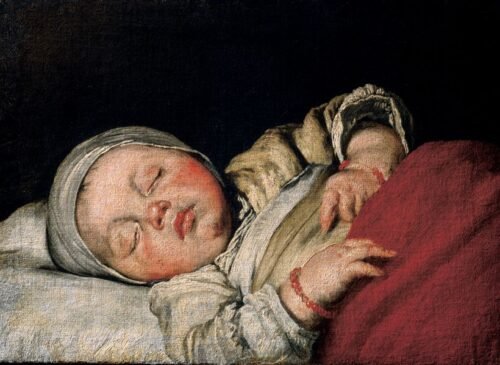
Early pregnancy was hard to confirm. Modern ideas about missed periods and pregnancy tests did not exist. Nausea, food cravings, and frequent urination might indicate early pregnancy, but they might just as easily be blamed on general illness or what medical writers called “obstructions.” Even the absence of menstruation was not always considered proof, since irregular cycles were common and not necessarily noteworthy.
Women paid close attention to their bodies, noted patterns, and compared experiences with other women. Still, certainty was elusive. The moment that truly mattered was quickening, when the mother first felt the child move, usually during the third or fourth month. Quickening was widely recognized as the moment of ensoulment, when the fetus became a human being. Before the ability to listen for a fetal heartbeat, these movements were the only confirmation that the child was alive at all.
Medical Professionals and Attendants
Childbirth was traditionally a female-controlled space, though this began to change during the eighteenth century. Most women delivered their children with the help of local female midwives. These women were not university-trained. Their knowledge came from long apprenticeships, careful observation, and instruction passed from one generation to the next. Skill mattered, but so did reputation. Midwives, usually working-class women, were expected to be women of good character and often licensed by the Church.
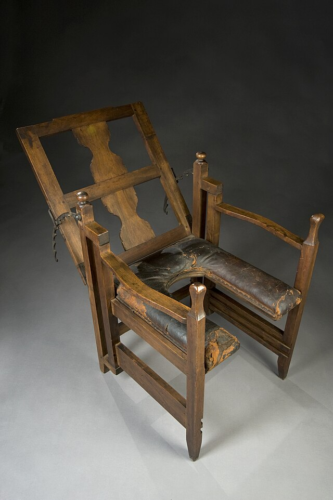
Folding, adjustable parturition chair, 18th-19th century. Chair in ‘relaxed’ position.
Wellcome Images
Creative Commons Attribution 4.0
They understood childbirth as a flexible process made up of many stages, not a single mechanical act. They managed not just the delivery itself, but the emotional and social rhythms of the birthing chamber and the long recovery afterward. Their goal was to assist a natural process, intervening as little as possible.
When intervention was needed, midwives relied on their hands. They massaged, adjusted, and manipulated the body to assist delivery. They were trained in the podalic version, a technique that involved reaching into the womb to turn a poorly positioned infant by the feet. These methods required strength, confidence, and intimate knowledge of the female body.
Midwives usually kept the birthing chamber dark and very warm. Fires burned constantly, even in summer, and windows and keyholes were sealed to keep out drafts. The practice was meant to protect the mother from “catching cold,” though male doctors later criticized the practice as stifling and unsanitary. Women were encouraged to move during labor. Walking, kneeling, and leaning on furniture were common, and some midwives used birthing stools to let gravity assist the process. These positions recognized the laboring woman as an active participant rather than a passive patient.
After delivery, the mother’s abdomen was often tightly bound with bandages or rollers. This was meant to support the uterus and help the body return to its former shape. It was part of the larger belief that the body needed firm guidance back to order after the upheaval of birth.
The introduction of the man-midwife
During the eighteenth century, male practitioners known as accoucheurs began to assert themselves as childbirth specialists. They were typically university-educated surgeons or physicians who approached birth through the emerging scientific study of anatomy. Unlike midwives, their knowledge often came from books and dissections rather than years of attending ordinary births.
Male practitioners tended to focus narrowly on the physical act of delivery. The laboring woman’s body was treated as a medical object, something to be managed and manipulated to extract the infant. Their defining feature was the use of specialized instruments, especially forceps, which remained a male monopoly for much of the century. Later in the 1800s, as obstetrics became more professionalized, male doctors introduced major shifts, including the use of anesthesia such as chloroform and the eventual adoption of antiseptic practices like hand-washing to prevent puerperal fever. While midwives continued to handle most domestic births, wealthy families increasingly hired male doctors as a mark of fashion and status.
Discussion of Pain
One of the most striking things about women’s letters from this period is how little they say about pain. Not because childbirth was painless, but because pain was assumed to be understood. Women usually wrote to other women who had already given birth or expected to do so. There was no need to explain what everyone already knew.
Instead of describing sensations, women focused on practical details. They wrote about how long the labor lasted, how large the baby was, and how quickly they recovered. These details mattered because they shaped the mother’s future health and the child’s chances in life.
Pain itself is difficult to put into words. Even today it resists precise description, and historical writers rarely attempted metaphors or comparisons. When pain was mentioned, it often appeared as sound. Women spoke of groaning or grumbling, terms that conveyed discomfort without anatomical detail.
There was also a clear reluctance to name reproductive body parts. These areas were associated with sexual activity and lacked acceptable language for polite conversation. Instead, women summarized their condition using broad terms like wellness or illness, signaling whether they were recovering without describing how.
The Role of Husbands and Fathers
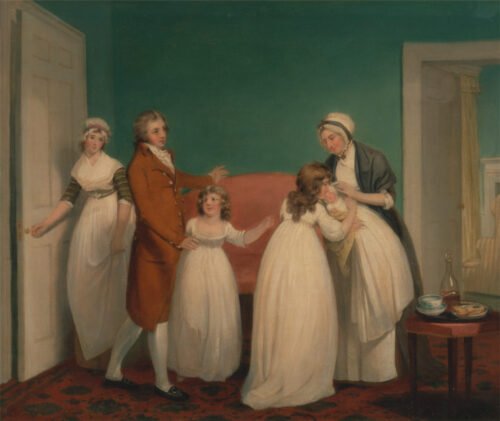
Men were generally excluded from the birthing room. Some husbands remained in the house as the birth approached, but once labor began, they were rarely considered useful. Their responsibility was to wait, worry, and hope for news from behind closed doors.
The month after birth was sometimes jokingly called the gander month, when men were left to manage household affairs while their wives were confined to bed.
Mortality Rates: Perception versus Reality
Childbirth was widely regarded as the most dangerous event in a woman’s life, and the fear surrounding it was real. While some later writers suggested maternal death rates as high as twenty percent, provincial records show a rate closer to half a percent.
The discrepancy between maternal mortality rates of 0.5% and 20% in historical sources stems from how the data is measured: one refers to the risk per individual birth, while the other refers to childbirth as a proportional cause of all deaths for women in their prime (those between 24 and 35 years old). Because women during this era often had many children—sometimes every 18 to 24 months—their cumulative risk of dying over a lifetime of repeated pregnancies was significantly higher than the 0.5% risk of a single event. Infection, postpartum hemorrhage, and complications from toxemia were among the most common killers. (Chamberlain, 2006)
Infant mortality was even more severe. In eighteenth-century London, two-thirds of children died before the age of five, and nearly half of all children born in Great Britain did not reach the age of twelve. Survival was never taken for granted.
Recovery: Lying-in and Churching
After birth, women entered a month-long period of confinement or lying-in. This was a time of enforced rest, physical recovery, and emotional adjustment. Elite women often had a monthly nurse hired for her care and received visitors in their chambers, turning recovery into a carefully managed social season. Food, conversation, and news circulated around the bed, reinforcing community ties.
The process ended with churching, a religious ceremony in which the mother gave thanks for her survival and was formally reintegrated into society. It marked the end of danger and confinement and the return to ordinary life, as ordinary as life could ever be in a world where childbirth was both expected and perilous.
Childbirth in the Georgian and Regency eras was not romantic. It was shaped by fear, skill, community, and endurance, and reminds us just how much of women’s lives unfolded behind closed doors, in darkened rooms, sustained by other women who knew exactly what it meant to be there.
Read more about Childhood and Infancy during the Regency HERE
References
“Midwifery in Britain: Pre Twentieth Century.” Memories of Nursing. https://memoriesofnursing.uk/articles/midwifery-in-britain-pre-twentieth-century.
Adkins, Roy, and Lesley Adkins. Jane Austen’s England. Viking, 2013.
Boyle, Laura. “Developments in Childbirth in Regency and Victorian England.” Jane Austen Centre Blog, June 20, 2011. https://www.janeausten.co.uk/developments-in-childbirth-in-regency-and-victorian-england/.
Chamberlain, Geoffrey. “British maternal mortality in the 19th and early 20th centuries.” Journal of the Royal Society of Medicine 99, no. 11 (November 2006): 559–563. https://doi.org/10.1258/jrsm.99.11.559
Collins, Irene. Jane Austen and the Clergy. London: Hambledon and London, 2001.
Collins, Irene. Jane Austen, the Parson’s Daughter. London: Hambledon Press, 1998.
Cuff, Mary. “Recovering the Betrothal Ceremony and the Churching of Women.” Crisis Magazine, February 14, 2022. https://www.crisismagazine.com/opinion/recovering-the-betrothal-ceremony-and-the-churching-of-women.
Ezekwem, Ogechukwu. “The Making of Man-Midwifery: Childbirth in England 1660-1770, by Adrian Wilson (1995).” Not Even Past, University of Texas at Austin, October 24, 2012. https://notevenpast.org/the-making-of-man-midwifery-childbirth-in-england-1660-1770-by-adrian-wilson-1995/.
Fitzsimons, Fiona. “The History of Churching of Women.” Irish Family History Centre. https://www.irishfamilyhistorycentre.com/article/the-history-of-churching-of-women/.
Forbes, Thomas R. “The Regulation of English Midwives in the Eighteenth and Nineteenth Centuries.” Medical History 8, no. 3 (1964): 352–362. https://obgynhistory.net/articles/1964-FORBES-RegEng-Rev-Aug2016.pdf.
Fox, Sarah. “Giving Birth in Eighteenth-Century England.” Historical Transactions (blog), Royal Historical Society, April 13, 2022. https://royalhistsoc.org/giving-birth-in-eighteenth-century-england/.
Fox, Sarah. Giving Birth in Eighteenth-Century England. London: University of London Press, 2022. https://uolpress.co.uk/book/giving-birth-in-eighteenth-century-england/ .
Froide, Amy M. “Review of David Cressy’s Birth, Marriage, and Death: Ritual, Religion, and the Life-Cycle in Tudor and Stuart England.” Medieval Feminist Forum 24, no. 1 (1997): 42–45. https://scholarworks.wmich.edu/mff/vol24/iss1/10/.
Indiana University Bloomington. “The Main Bedroom: Confinement.” Wylie House Exhibits. https://exhibits.library.indiana.edu/s/wylie-house-exhibit/page/confinement.
Knödel, Natalie. The Thanksgiving of Women after Childbirth, commonly called The Churching of Women. University of Durham. April 1995 http://users.ox.ac.uk/~mikef/church.html
Kroeger, Catherine. “The Neglected History of Women in the Early Church.” Christian History Magazine, no. 17 (1988). https://www.christianitytoday.com/history/issues/issue-17/neglected-history-of-women-in-early-church.html.
Lamb, Tiphaine. “The Forgotten Tradition of ‘Churching,’ the Ancient Postpartum Blessing.” EWTN Great Britain, February 1, 2025. https://www.ewtn.co.uk/article-the-forgotten-tradition-of-churching-the-ancient-postpartum-blessing/.
Lane, Maggie. Jane Austen’s World: The Life and times of England’s Most Popular Novelist. 2nd ed. London: Carlton Books, 2005.
Lewis, Judith Schneid. In the Family Way: Childbearing in the British Aristocracy, 1760-1860. New Brunswick, N.J.: Rutgers University Press, 1986.
Marland, Hilary. “Victorian Childbirth.” Victorian Web, September 23, 2022. https://victorianweb.org/science/health/pregnancy/childbirth.html.
Martin, Joanna. Wives and Daughters: Women and Children in the Georgian Country House. London: Hambledon and London, 2004.
Morledge, Clarke. “The Churching of Women?” Veracity (blog), January 20, 2018. https://sharedveracity.net/2018/01/20/the-churching-of-women/.
Pope, Charles. “The Churching of Women and its Relation to the Feast of the Presentation.” Community in Mission (blog), February 3, 2019. https://blog.adw.org/2019/02/churching-women-relation-feast-presentation/.
Schulte, Augustin Joseph. “Churching of Women.” In The Catholic Encyclopedia, vol. 3. New York: Robert Appleton Company, 1908. http://www.newadvent.org/cathen/03761a.htm.
Selwyn, David. Jane Austen and Children. New York City: Continuum Books, 2010.
Vickery, Amanda. The Gentleman’s Daughter: Women’s Lives in Georgian England. New Haven, Conn.: Yale University Press, 1998.
Comments
Childbirth in the early 1800s — No Comments
HTML tags allowed in your comment: <a href="" title=""> <abbr title=""> <acronym title=""> <b> <blockquote cite=""> <cite> <code> <del datetime=""> <em> <i> <q cite=""> <s> <strike> <strong>