
The Calling Card as Social Currency
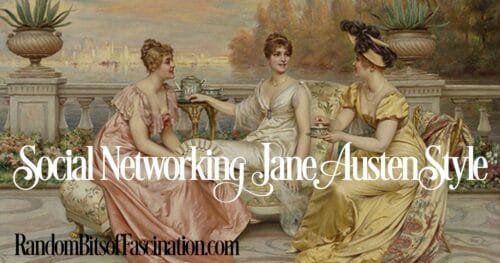
The calling card was far more than a tool for introduction; it was a form of social currency used to signal one’s intentions and maneuver through the complex social landscape. Cards could initiate relationships, maintain connections, or deliver a polite but firm rejection.
Upon arriving in a new city, a person would leave cards to announce their presence, as Mrs. Jennings does in Sense and Sensibility. It was also the primary method for initiating an acquaintance; Sir Walter Elliot in Persuasion found himself inundated with cards from strangers eager to enter his social orbit. This system also served as a crucial form of social gatekeeping. The recipient had the power to screen potential visitors, deciding whether to return the call and further the acquaintance or to (politely) ignore it.
In a potent display of a card’s power, cards were displayed in the entrance hall, often on a silver tray, or “salver.” A full tray advertised one’s popularity and connections, especially when the most influential callers’ cards were placed conspicuously on top. Not entirely like some use follower counts and social ‘likes’ to signal the same things today.
Primary Functions of the Calling Card
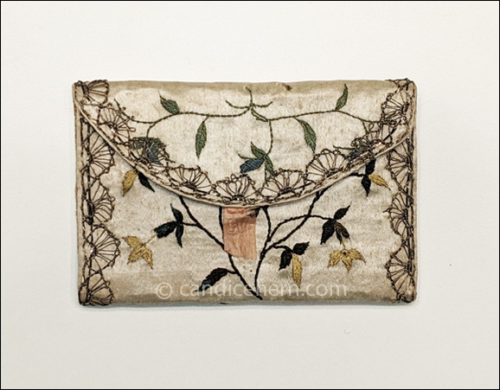
The simple act of leaving a card could carry various meanings depending on the context. The most common circumstances included:
Announcing One’s Presence: Upon arriving in town, individuals would make a round of calls, leaving cards at the homes of their acquaintances to signal their availability for the social season.
Initiating an Acquaintance: Leaving a card at the home of a stranger was a formal expression of a desire to form a new social connection. This was a gamble, as a return card was not guaranteed.
Conveying Thanks: Etiquette demanded that a card be left the day after attending a dinner party, ball, or other entertainment. This served as a formal, silent thank you for the hospitality.
Managing Marital Circles: After a marriage, the new couple would send out their joint cards to a select list of acquaintances. This was a strategic act, signaling who would be included in their new social life and silently dropping those who were not deemed suitable for the new union.
Offering Condolences: In the case of a death, leaving a card was the proper way to express sympathy. It conveyed respect for the grieving family without intruding on their privacy during a difficult time.
Taking Leave: When preparing to leave town, individuals would leave cards marked with the initials P.P.C. (pour prendre congé, or “to take leave”). This informed their social circle of their impending departure.
How Many Cards to Leave?
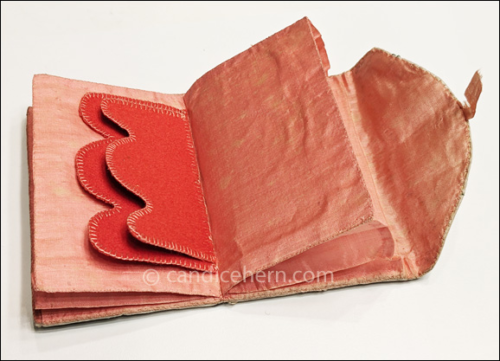
The first principle governing the number of cards was to leave a card for each individual in the household one wished to acknowledge. As Mrs. Parkes (1829) instructed in Domestic Duties, in a household with “the mother, aunt, and daughters (the latter having been introduced to society), three cards should be left.” This ensured that each intended recipient was properly recognized.
A married lady, would often leave her husband’s cards along with her own: her own card for the mistress of the house, and two of her husband’s cards—one for the master and one for the mistress. This convention acknowledged every senior member of the household appropriately.
Once cards were exchanged, the critical process of paying calls could begin. Coming up next: A Primer of Regency Social Calls
References
Ashcraft, Jenny. “Let Me Leave You My Card.” Fishwrap (blog), August 13, 2020. https://blog.newspapers.com/let-me-leave-you-my-calling-card/
Beeton, Isabella. Mrs. Beeton’s Book of Household Management. Project Gutenberg, 2006. https://www.gutenberg.org/ebooks/10136.
Boyle, Laura. “Paying Social Calls.” Jane Austen Centre (blog), June 20, 2011. https://janeausten.co.uk/blogs/regency-history/paying-social-calls.
Golden, Paullett. “Calling Cards & Paying Calls: Social Etiquette in Georgian England.” Paullett Golden Romance (blog), May 31, 2022. https://www.paullettgolden.com/post/calling-cards-paying-calls-social-etiquette-in-georgian-england.
Green, Claire. “Calling Cards and Visiting Cards: A Brief History.” Hoban Cards (blog), September 12, 2016. https://hobancards.com/blog/calling-cards-and-visiting-cards-a-brief-history.
Hoppe, Michelle. “Calling Cards and the Etiquette of Paying Calls.” Literary Liaisons, 2000. http://www.literaryliaisons.com/article001.html.
Knowles, Rachel. “Visiting cards in the Regency.” Regency History (blog), June 1, 2022. https://www.regencyhistory.net/2022/06/visiting-cards-in-regency.html.
Odegaard, Kirstin. “Let’s Get Social: Morning Calls and Calling Cards in Austen’s Day.” Always Austen (blog), September 30, 2024. https://alwaysausten.com/2024/09/30/lets-get-social-morning-calls-and-calling-cards-in-austens-day.
Parkes, Mrs. William. Domestic Duties: or Instructions to young married ladies…. J&J Harper. New York: New York. 1829 Internet Archive. https://archive.org/details/domesticdutiesor00park_0/page/n5/mode/2up
Phillis, Edward. “Impressing the Neighbours, Georgian style.” Strictly Jane Austen (blog), June 8, 2022. https://www.strictlyjaneausten.com/impressing-the-neighbours-georgian-style.
Richmond, Arietta. “The Art of the Calling Card: Strict Etiquette and Social Interactions.” Arietta Richmond – Author (blog), August 10, 2025. https://ariettarichmond.com/the-art-of-the-calling-card-strict-etiquette-and-social-interactions.
Sanborn, Vic. “The Etiquette of Using Calling Cards.” Jane Austen’s World (blog), May 21, 2007. https://janeaustenworld.com/2007/05/21/the-etiquette-of-using-calling-cards.
Comments
The Calling Card as Social Currency — No Comments
HTML tags allowed in your comment: <a href="" title=""> <abbr title=""> <acronym title=""> <b> <blockquote cite=""> <cite> <code> <del datetime=""> <em> <i> <q cite=""> <s> <strike> <strong>