
A Tale of Two Weddings, pt 2
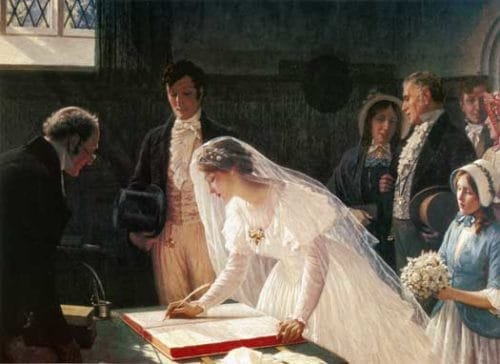
The wedding ceremony itself was a performance of social status in 19th-century England. The choice of venue, the scale of the gathering, even the time of the service differed across the social landscape, reflecting the distinct privileges and limitations of each class.
The Aristocratic Ceremony: An Exclusive Affair
Contrary to modern expectations, the aristocratic wedding was often a private and family-centered affair, rather than a grand public event. The ceremony was typically attended by only a small number of close family members; the 5th Duke of Devonshire to Lady Georgiana Spencer’s wedding, was attended by only five people.
Exclusivity was a definitive marker of status. The special license was crucial to this privacy, enabling the nobility to marry in the comfort of their own homes or in a fashionable church like St. George’s, Hanover Square, at any time of day, bypassing the public gaze and the strict canonical hours (8 a.m. to noon) that governed most ceremonies.
The Middle-Class Ceremony: A Respectable Parish Affair
For the middle class, the wedding ceremony took place in a parish church, legitimized either by the public reading of banns or the more private procurement of a common license. While more public than an aristocratic wedding, the event remained a family gathering. The choice of a parish church and adherence to the standard morning hours signaled a commitment to respectable, conventional norms.
The Working-Class Ceremony: Public and Unadorned
The working-class wedding was conducted in the local parish church following the publishing of the banns. These services were simple, public, and governed by the canonical hours. It was considered a sign of “friendly attention” for community members who were not specifically invited to a private wedding breakfast to still attend the ceremony at the church. Sometimes, the broader community took part in the celebration through ancient traditions, such as unmarried women from the village strewing flowers before the couple. Community participation helped create a public declaration of marriage and allowed the community to embrace it. Such celebrations could get rowdy and out of control, though, thus the desire for private events in the upper classes.
Bridal Attire: From Practicality to Pageantry
In the 19th century, a bride’s wedding attire was a potent symbol, making a statement about her family’s wealth, her own practicality, and her adherence to social trends. The simple functionality of the Regency gave way to greater pageantry in the Victorian era.
Aristocratic and Gentry Attire: The Rise of the White Gown
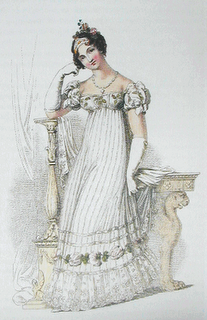
During the Regency period, the white wedding gown was not yet a widespread tradition. A wealthy bride would marry in her “best dress,” which might be a specially made gown of fine materials like silk or muslin in white or a pastel shade, but quality, not color, was the primary consideration.
This changed after Queen Victoria’s wedding to Prince Albert in 1840. The Queen deliberately chose to wear a gown of white Spitalfields satin and Honiton lace to support England’s flagging lace industry and domestic textile production. The image of the Queen in her white gown was widely circulated, and her royal endorsement established the white wedding dress as the ultimate symbol of fashion, status, and purity among wealthy brides for the rest of the century.
Middle and Working-Class Attire: The Primacy of Practicality
For middle-class and working-class brides, practicality was the guiding principle. Through most of the 19th century, these women married in their “Sunday best.” If a new dress was acquired, it was chosen in a color and style that could be worn for other social occasions. While the trend for white dresses eventually trickled down the social ladder, for the majority of the population, a sensible, reusable dress was the norm. This focus on utility extended naturally to the celebration that followed the ceremony.
Feasts, Tours, and Day Trips
Because 19th-century law required most wedding ceremonies to be held in the morning, the subsequent gathering was universally known as a “wedding breakfast.” The scale and nature of this meal were a direct reflection of a family’s economic capacity and social customs, ranging from elaborate multi-course feasts to the simplest of acknowledgements.
The Aristocratic Wedding Breakfast and Bridal Tour
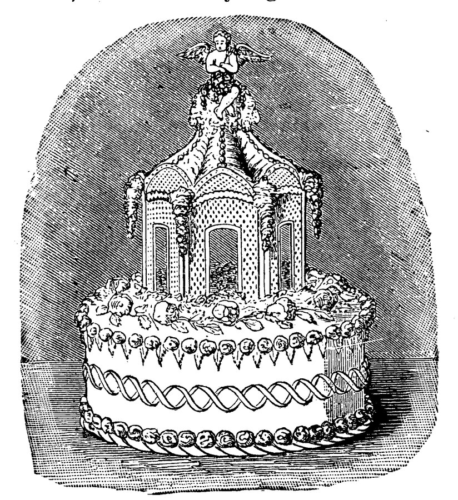
For the aristocracy, the wedding breakfast was an elegant gathering for close family held at the bride’s home. The meal was often elaborate, featuring multiple toasts and culminating in a wedding cake. It was a common custom to send slices of the cake to friends and relatives who were unable to attend. Following the breakfast, the newlyweds would depart on their honeymoon. Early in the century, this was often a practical “bridal tour,” involving visits to friends and relatives. With the later boom in railway travel, this developed into the private, romantic trip that became the standard by the late Victorian era.
Middle-Class and Working-Class Celebrations
A middle-class family would also host a wedding breakfast at home, mirroring the aristocratic custom but on a smaller and less lavish scale, with a focus on providing a respectable meal for family and friends.
For the working class, celebrations were often minimal. Hosting a meal for guests might be out of the question. A honeymoon might be nothing more than a day’s jaunt to the seaside.
From the legal permissions required to marry to the honeymoon, social class shaped and defined wedding practices in 19th-century England. Across all economic strata, the period witnessed a gradual shift from the relative simplicity of the Regency to the greater ceremony and pageantry of the Victorian age. Now of course, I’m wondering that the dragons would think of this trend.
Read more about Regency wedding dresses here
Read more about Regency Wedding Cake here
Read more about Regency era Courtship and Marriage
References
“Unveiling Victorian Wedding Traditions.” MASTERPIECE, PBS. https://www.pbs.org/wgbh/masterpiece/specialfeatures/unveiling-victorian-wedding-traditions. (accessed January 26, 2026).
Knowles, Rachel. “Hardwicke’s Marriage Act and Wedding Licences.” Regency History. https://www.regencyhistory.net/blog/marriage-licences-banns-regency-history-guide (accessed January 26, 2026).
“Regency Wedding Breakfast.” Jane Austen History. https://janeausten.co.uk/blogs/regency-history/the-regency-wedding-breakfast (accessed January 26, 2026).
BBC/Wikipedia, Wedding of Queen Victoria and Prince Albert. https://en.wikipedia.org/wiki/Wedding_of_Queen_Victoria_and_Prince_Albert (accessed January 26, 2026).
Betts, Charlotte. Courtship and Weddings in the Victorian Era. Charlotte Betts. https://www.charlottebetts.com/courtship-and-weddings-women-and-marriage-in-the-victorian-and-edwardian-eras-part-1/ (accessed January 26, 2026).
Bolen, Cheryl. “Courting and Marriage in the Regency.” Cheryl Bolen, Author. Accessed October 26, 2024. https://www.cherylbolen.com/courting.htm . (accessed January 26, 2026).
Boyle, Laura. “The Regency Wedding Breakfast.” JaneAusten.co.uk, April 19, 2016. https://janeausten.co.uk/blogs/jane-austen-life/the-regency-wedding-breakfast (accessed January 26, 2026).
Boyle, Laura. “Weddings During the Regency Era.” JaneAusten.co.uk, June 20, 2011. https://janeausten.co.uk/blogs/jane-austen-life/weddings-during-the-regency-era (accessed January 26, 2026).
Cox, Brenda S. “Banns, Common Licenses, and Special Licenses: Permission to Marry in Jane Austen’s England.” Jane Austen’s World (August 23, 2021). https://janeaustensworld.com/2021/08/23/banns-common-licenses-and-special-licenses-permission-to-marry-in-jane-austens-england/ (accessed January 26, 2026).
Eastwood, Gail. “What We ‘Know’ about Regency Weddings.” Risky Regencies, September 10, 2020. https://riskyregencies.com/2020/09/10/what-we-know-about-regency-weddings (accessed January 26, 2026).
Ives, Susanna. “Victorian Wedding Etiquette.” Susanna Ives | My Floating World, November 14, 2015. https://susannaives.com/2015/11/14/victorian-wedding-etiquette (accessed January 26, 2026).
Knowles, Rachel. “Banns, licences and Hardwicke’s Marriage Act – a Regency History guide to marriage in Georgian England.” Regency History, October 17, 2021. https://www.regencyhistory.net/2021/10/banns-licences-and-hardwickes.html (accessed January 26, 2026).
Koster, Kristen. “A Regency Marriage Primer.” Kristen Koster, Author, October 11, 2011. https://kristenkoster.com/a-regency-marriage-primer. (accessed January 26, 2026).
PBS. Unveiling Victorian Wedding Traditions. https://www.pbs.org/wgbh/masterpiece/specialfeatures/unveiling-victorian-wedding-traditions/ (accessed January 26, 2026).
Wikipedia, Wedding Dress of Queen Victoria. https://en.wikipedia.org/wiki/Wedding_dress_of_Queen_Victoria (accessed January 26,2026).
Love all these wedding posts. Fascinating!